
Curtain Installation Singapore: Your 2026 Home Guide
By Prime Decor Furnishing
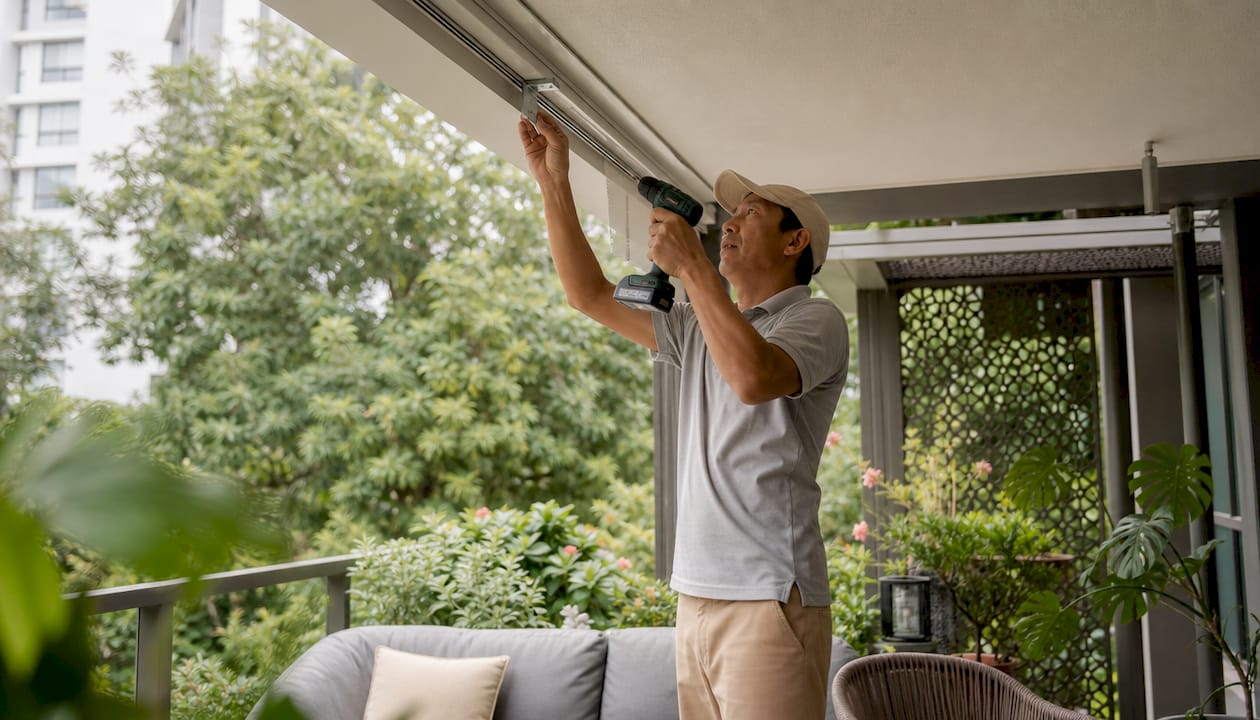
Curtain Installation Singapore: Your 2026 Home Guide
Professional curtain installation in Singapore is the process of measuring, mounting hardware, and hanging window treatments to achieve both function and style in your home. Get it right, and your rooms feel taller, cooler, and more finished. Get it wrong, and you’re left with sagging tracks, faded fabric, and wasted money. This guide covers the hardware choices, measurement techniques, tools, step-by-step process, and real cost ranges Singapore homeowners need in 2026, including what Primedecorfurnishing recommends for HDB flats and condos alike.
What types of curtain hardware are suitable for Singapore homes?
The choice between curtain tracks and rods is primarily functional. Tracks support more heading styles, including wave-fold and S-fold, and are the only option that works with motorized systems. Rods suit eyelet and tab-top curtains and deliver a more traditional look. For most Singapore homes, ceiling-mounted tracks provide a clean, minimal aesthetic that maximizes curtain drop height. That extra visual length makes a real difference in HDB flats with standard 2.6–2.8m ceilings.
Ceiling-mounted vs. wall-mounted options
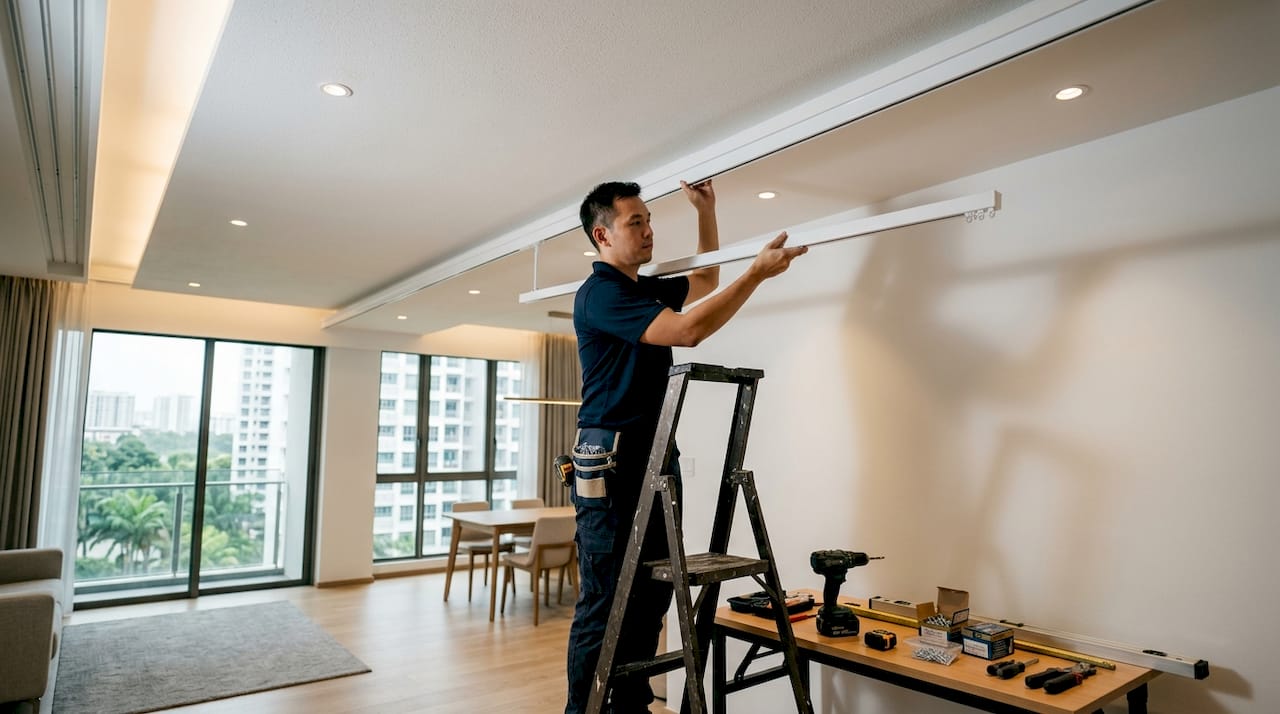
Ceiling-mounted tracks run flush against the ceiling and work especially well in condos with concealed cornices or false ceilings. Wall-mounted rods and tracks attach directly to the wall above the window frame. Wall-mounted hardware should sit 10–15cm above the window frame to visually increase window height. That small adjustment makes a room feel more spacious without any renovation work.
Motorized curtain systems
Motorized tracks are popular in larger Singapore homes, especially for floor-to-ceiling glass panels where manual operation is awkward. The key warning: unbranded curtain motors commonly fail shortly after a one-year warranty expires. Branded motors cost more upfront but last significantly longer. Budget for the better motor from the start, or you will pay twice.
Key hardware considerations at a glance:
- Curtain tracks: Best for wave-fold, S-fold, and motorized systems; ceiling or wall mount
- Curtain rods: Best for eyelet and tab-top styles; wall mount only
- Motorized systems: Require pre-planned wiring; use branded motors only
- Bracket spacing: Space brackets every 50–60cm for stability, especially with heavy blackout fabrics
Pro Tip: Always check the weight rating on your chosen track or rod. Hardware should be rated 30–40% above the total weight of your curtain assembly to prevent sagging over time.
How to measure for curtain installation correctly in Singapore homes
Accurate measurement is the single most common failure point in DIY window treatment installation. Singapore homes, particularly older HDB blocks, have walls that are rarely perfectly square. Measure window width at three separate points: top, middle, and bottom. Use the narrowest measurement to avoid curtains that won’t close properly.
Follow these steps for a precise fit:
- Measure the window width. Add 15–20cm to each side of the frame so the curtain stacks fully clear of the glass when open. This keeps your view unobstructed and makes the window look wider.
- Measure the drop. Decide whether you want floor-length or sill-length curtains. For floor-length panels, subtract 1–2cm so the curtain hovers just above the floor. This reduces dust accumulation and keeps the hem clean.
- Mark your bracket positions. Measure up from the window frame 10–15cm, or go all the way to the ceiling line for a dramatic effect.
- Check bracket spacing. Mark bracket positions every 50–60cm across the track length. Skipping this step causes sagging, especially with lined blackout curtains.
- Double-check all measurements. Measure twice before drilling anything. Wall inconsistencies in older Singapore buildings are common, and a 1cm error compounds across a wide window.
Pro Tip: Use a laser level, not just a spirit level, when marking bracket positions across a wide window. Singapore’s older HDB ceilings can slope slightly, and a laser line catches that before you drill.
What tools and materials are required for curtain installation?
The right tools make the difference between a secure installation and one that pulls out of the wall in six months. Singapore’s HDB flats have concrete ceilings and walls, which require specific equipment that standard home toolkits don’t include.
Essential tools:
- Rotary hammer drill: Standard drills won’t penetrate HDB concrete reliably. A rotary hammer with masonry bits is the correct tool for concrete ceiling installation.
- Laser or spirit level: Keeps your track perfectly horizontal across the full width.
- Measuring tape: A 5m steel tape is the minimum for full-room measurements.
- Pencil and marking tape: For marking drill points without damaging the ceiling.
- Screwdriver set: Both Phillips and flathead for bracket assembly.
| Tool | Purpose |
|---|---|
| Rotary hammer drill | Drilling into HDB concrete ceilings and walls |
| Masonry drill bits | Creating clean holes in concrete without cracking |
| Concrete anchors | Securing brackets in concrete; standard wall plugs fail under weight |
| Spirit or laser level | Keeping tracks and rods perfectly horizontal |
| Measuring tape | Accurate width and drop measurements |
| Curtain hooks or gliders | Hanging curtain panels onto tracks or rods |
Concrete anchors deserve special attention. Standard wall plugs fail under the weight of heavy curtains in concrete ceilings. Use masonry anchors rated for the load. For plasterboard ceilings in some condos, toggle bolts are the correct choice. Knowing your ceiling type before you buy anchors saves a wasted trip to the hardware store.
What is the step-by-step curtain installation process?
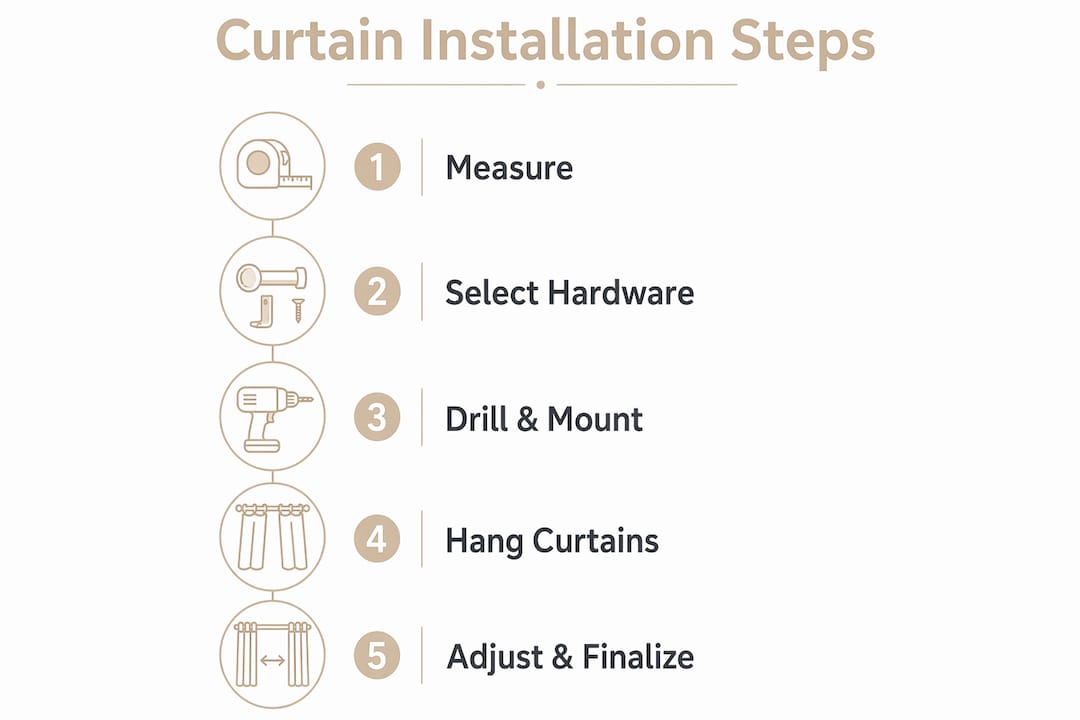
A clean installation follows a fixed sequence. Skipping steps, especially the marking and checking stages, causes the most common errors seen in Singapore homes.
- Mark bracket positions. Measure up 10–15cm above the window frame, or to the ceiling line. Mark each bracket position with a pencil. Use a level to confirm all marks sit on the same horizontal line.
- Drill pilot holes. Use the rotary hammer drill with the correct masonry bit. Drill to the depth recommended for your anchor size, typically 40–50mm for concrete. Stop and verify your path avoids concealed electrical conduits or plumbing before drilling. If you are unsure, use a cable detector first.
- Insert anchors. Tap concrete anchors firmly into each hole. They should sit flush with the surface. Loose anchors mean the hole is too wide; fill and re-drill rather than forcing the bracket.
- Fix brackets. Screw brackets into the anchors. Test each bracket by pulling firmly before hanging any hardware. A bracket that moves at this stage will fail under curtain weight.
- Install the track or rod. Clip or slide the track onto the brackets. For rods, thread finials onto the ends before mounting. Check the track runs level across its full length.
- Hang curtain panels. Attach curtain hooks or gliders to the heading tape at the spacing specified by the manufacturer. Slide or clip panels onto the track. For eyelet curtains, thread the rod through the eyelets before mounting.
- Adjust and dress. Pull curtains to both ends and check the stack. Adjust hook spacing if panels bunch unevenly. For wave-fold curtains, space gliders evenly to create consistent folds.
Common mistakes to avoid: mounting too low (below 10cm above the frame), using undersized hardware for heavy fabrics, skipping the cable check before drilling, and spacing brackets more than 60cm apart on heavy tracks. Each of these errors is fixable before installation but expensive after.
Typical costs and budgeting tips for curtain installation in Singapore
Curtain track or rod installation in Singapore typically costs between S$80 and S$140 per set for windows up to 3 meters. That covers labor and basic hardware. Fabric, motorization, and premium finishes add to the total.
For a complete home setup, the numbers scale quickly. Fully furnishing a 4-room HDB flat with curtains costs between S$1,500 and S$9,000, depending on fabric quality and whether you include motorized tracks. That range is wide because fabric grade drives cost more than labor does.
Key cost factors to account for:
- Fabric grade: UV-rated fabrics cost more but are necessary. Polyester without UV treatment fades or becomes brittle within 12–18 months under Singapore’s direct sunlight.
- Motorization: Branded motorized tracks add significant cost but are worth it for large windows. Avoid unbranded motors to prevent early failure.
- Bundle pricing: Full-house installations covering 4–5 rooms often come with 15–20% savings compared to pricing each window separately.
- Installer credentials: Verify business registration and check Google reviews before committing. Top-rated providers in Singapore maintain average scores near 5.0.
Pro Tip: Bundle your curtain installation with other home fittings like blinds or feature wall panels. Many providers offer package discounts that reduce the per-window cost significantly.
Key Takeaways
Professional curtain installation in Singapore requires the right hardware for your ceiling type, accurate multi-point measurements, UV-rated fabrics, and properly spaced brackets to deliver a result that lasts.
| Point | Details |
|---|---|
| Hardware choice matters | Tracks suit motorized and wave-fold styles; rods work for eyelet and tab-top curtains only. |
| Measure at three points | Measure window width at top, middle, and bottom to catch wall irregularities common in HDB flats. |
| Use the right anchors | Concrete ceilings need masonry anchors and a rotary hammer drill; standard plugs fail under weight. |
| Budget for UV-rated fabric | Polyester without UV treatment degrades within 12–18 months under Singapore’s direct sunlight. |
| Bundle for savings | Full-house installations often cost 15–20% less per window than single-window pricing. |
What I’ve learned from watching Singapore homeowners get this wrong
Most homeowners underestimate how much the hardware decision shapes everything else. I’ve seen beautifully chosen fabric ruined by a cheap track that sags within a year. The curtain gets blamed, but the track was always the problem.
The measurement step is where DIY ambition most often collides with reality. Singapore’s older HDB blocks have walls that look flat but aren’t. A professional measurer catches a 2cm slope across a 3-meter window before it becomes a curtain that won’t close. That single visit pays for itself.
My honest recommendation on fabric: always choose UV-rated material, even if it costs more. Singapore’s equatorial sun is relentless. A fabric that looks fine in a showroom can become brittle and discolored within a year if it lacks UV protection. Spend the extra money once rather than replacing curtains twice.
On mounting height, go higher than feels natural. Most homeowners instinctively mount at the window frame. Mounting 10–15cm above the frame, or at ceiling level, makes the room feel noticeably taller. It’s one of the few interior changes that costs nothing extra but delivers a visible result every day.
— Morgan
Why Primedecorfurnishing is worth a closer look
Primedecorfurnishing has completed installations for over 5,000 satisfied customers across Singapore, with recognition from The Straits Times for pricing transparency. The service covers custom measurements, hardware selection, and professional fitting for HDB flats, condos, and landed homes.

Every project starts with a personalized consultation so you get the right fabric, the right hardware, and the right mounting approach for your specific home. Primedecorfurnishing backs its work with a product warranty and clear project timelines. If you’re ready to get your window treatments done properly, visit Primedecorfurnishing to request a consultation and see the full range of premium home furnishing options available for Singapore residences.
FAQ
How much does curtain installation cost in Singapore?
Track or rod installation typically costs between S$80 and S$140 per window for spans up to 3 meters. Full-home packages for a 4-room HDB flat range from S$1,500 to S$9,000 depending on fabric grade and motorization.
What type of drill do I need for HDB curtain installation?
HDB flats have concrete ceilings that require a rotary hammer drill with masonry bits. Standard drills and wall plugs are not strong enough for concrete and will fail under curtain weight.
How high should curtain tracks be mounted in Singapore homes?
Mount tracks 10–15cm above the window frame, or at ceiling level for maximum visual height. This approach makes rooms with standard 2.6–2.8m ceilings feel noticeably taller.
Are motorized curtains worth it in Singapore?
Motorized curtains are worth the investment for large or floor-to-ceiling windows where manual operation is impractical. Always choose a branded motor, as unbranded units commonly fail after the one-year warranty period.
How do I choose between curtain tracks and rods?
Choose tracks if you want motorization, wave-fold, or S-fold styles. Choose rods for eyelet or tab-top curtains with a more traditional look. Tracks offer more flexibility and are the better long-term choice for most Singapore homes.
Recommended
Ready to transform your home?
Chat with us on WhatsApp for a free consultation or quote.
Chat with us on WhatsApp