
Curtain Material Singapore: Best Fabrics for Home Windows
By Prime Decor Furnishing
Curtain Material Singapore: Best Fabrics for Home Windows
For Singapore homes, polyester blends and layered sheer-plus-lined systems are the most practical everyday choice. They handle the heat, shrug off humidity, and hold their color under direct sun far better than pure natural fibers. Here’s the short version before you dive into the details:
- Bedroom: Lined blackout polyester or heavy velvet with a blackout lining. Nothing else reliably blocks Singapore’s early morning sun.
- Living room: Linen-look or cotton-blend panels paired with sheer voiles for day-night flexibility.
- Bathroom / service yard: Moisture-tolerant synthetics only. Mold is a real risk with natural fibers in these spaces.
- Home theater / media room: Heavy blackout with thermal lining. The lining does more work than the face fabric.
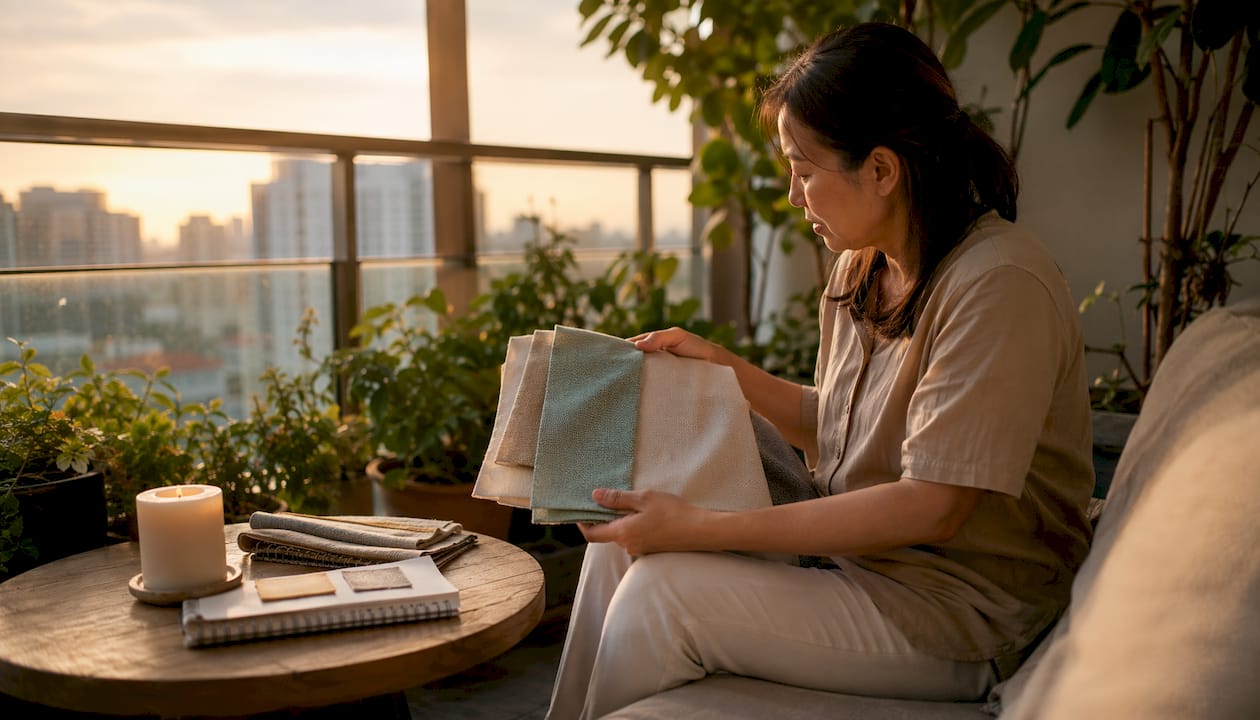
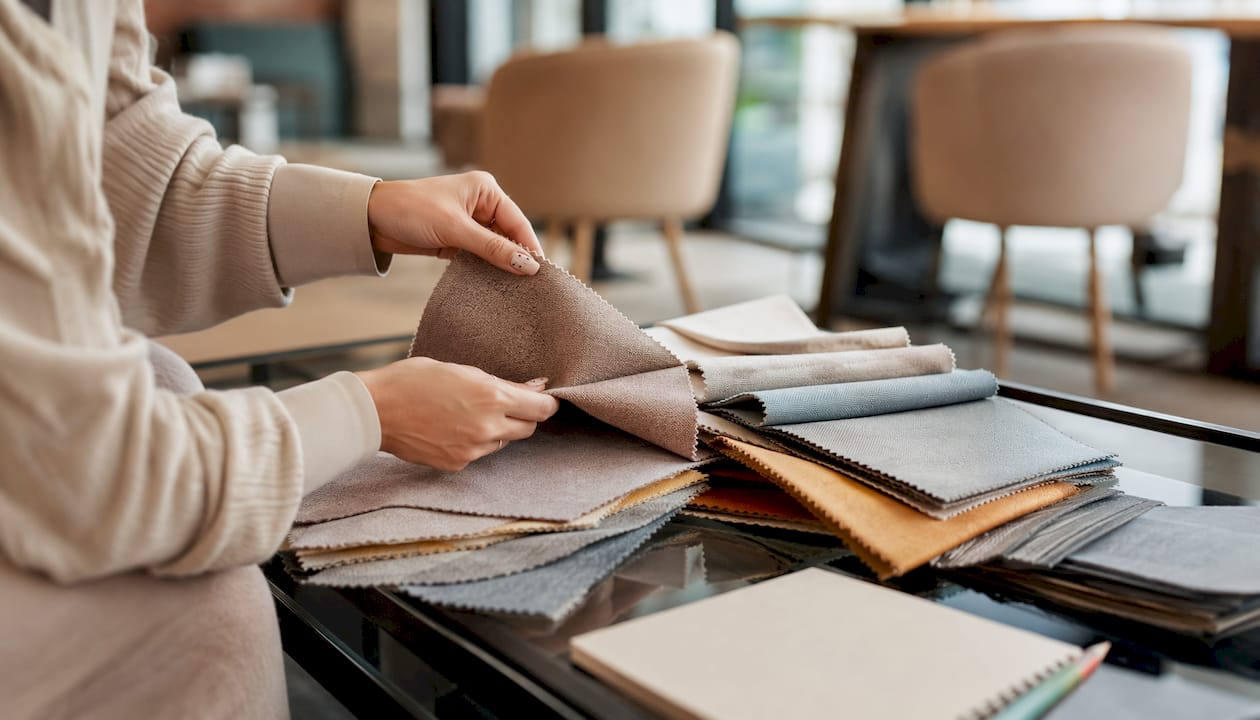
Pro Tip: Before committing to any fabric, request physical swatches and hold them against your actual window in daylight. Showroom lighting flatters almost everything. Primedecorfurnishing offers on-site measurement and sample consultations so you see exactly what you’re getting before fabrication begins.
Table of Contents
- What each curtain fabric actually does in Singapore conditions
- How blackout linings and layered systems actually work
- How to choose curtain fabric: the practical checklist
- Where to buy curtain fabric and curtains in Singapore
- Caring for curtains in Singapore’s humid climate
- What curtains cost and how long they take in Singapore
- How Primedecorfurnishing handles measurement, materials, and installation
- Choosing curtain fabrics for indoor air quality and mold prevention
- How sustainable are the curtain fabrics available in Singapore?
- Local designers and specialists in Singapore curtain fabrics
- Key Takeaways
- What most curtain guides get wrong about Singapore homes
- Primedecorfurnishing: custom curtains measured and installed for your home
- Useful local sources and further reading
What each curtain fabric actually does in Singapore conditions
Singapore’s climate is the deciding factor for every fabric choice. Humidity sits above 80% for much of the year, UV exposure is intense, and air conditioning creates sharp temperature swings between indoors and out. That combination punishes natural fibers and rewards performance synthetics.
Cotton
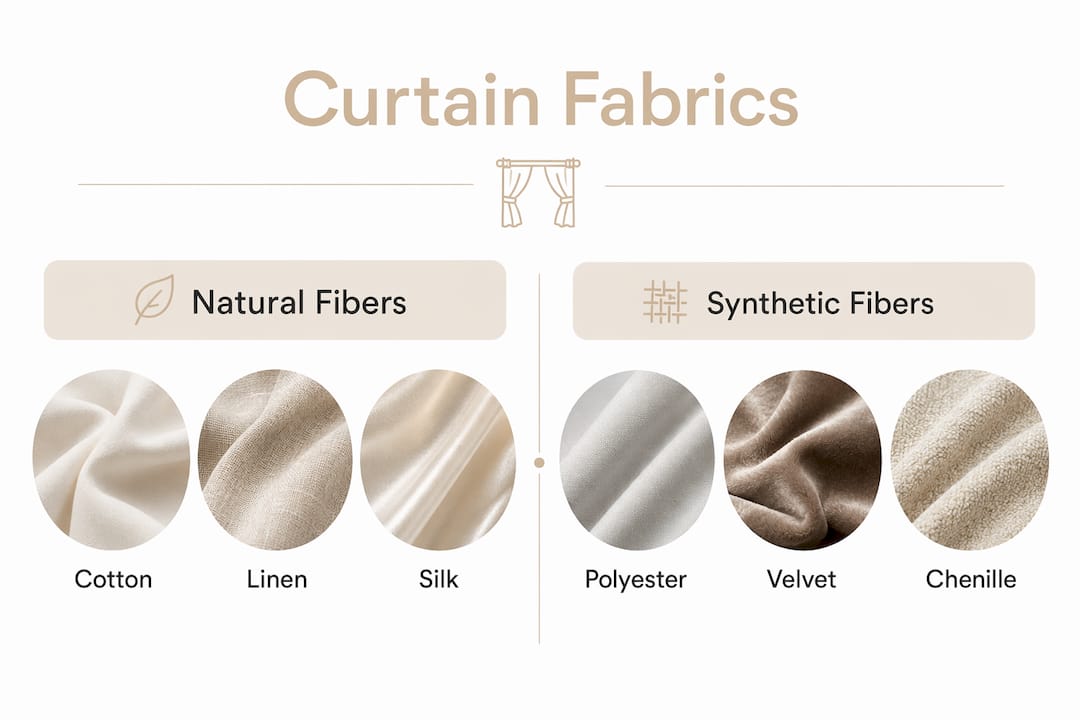
Cotton curtains feel good and look clean, but 100% cotton fades faster on west-facing windows and can hold moisture if ventilation is poor. Medium-weight cotton (around 150–300 GSM) works well in air-conditioned bedrooms and living rooms where direct sun is limited. For sun-exposed windows, a cotton-polyester blend is a smarter pick.
Linen and linen blends
Pure linen has a beautiful natural drape, but it creases easily, fades under prolonged UV exposure, and can develop mold in humid rooms. Linen-polyester blends solve most of those problems while keeping the textured, organic look. Use them in living rooms and dining areas where aesthetics matter and direct sun is moderate.
Polyester and synthetic blends
Polyester-based fabrics deliver better wrinkle resistance and colorfastness under prolonged sun exposure, making them the practical workhorse for Singapore homes. They’re easy to clean, resistant to moisture, and hold their shape through repeated washing. For family homes, polyester blends are the default recommendation from most local installers.
Silk and silk-look fabrics
Genuine silk is delicate, expensive, and poorly suited to humid conditions. Silk-look polyester (faux silk or dupioni-style synthetics) gives you the sheen and elegance without the maintenance headache. Reserve these for formal living rooms or master bedrooms with good climate control.
Velvet and chenille
Velvet adds acoustic dampening and a luxurious weight that suits media rooms and formal spaces. It’s heavy (often 300+ GSM), which means excellent light control and thermal performance. The trade-off: velvet requires professional dry cleaning and is not ideal for rooms with poor air circulation.
| Fabric | Best for | Light control | Humidity resistance | Maintenance | Price band (SGD/m) |
|---|---|---|---|---|---|
| Cotton blend | Bedrooms, living rooms | Medium | Moderate | Machine wash | — |
| Linen-polyester blend | Living rooms, dining | Low–medium | Good | Gentle machine wash | — |
| Polyester / synthetic | All rooms, high-exposure | Medium–high | Excellent | Machine wash | — |
| Silk-look polyester | Formal rooms, bedrooms | Low–medium | Good | Gentle wash / dry clean | — |
| Velvet / chenille | Media rooms, bedrooms | High | Moderate | Dry clean | SGD 150 to SGD 500 |
How blackout linings and layered systems actually work
The single most common misconception about blackout curtains is that the face fabric does the blocking. It usually doesn’t. A thin, single-layer “blackout” fabric often lets light bleed through seams and edges. The real performance comes from the lining.
Blackout performance ranges from dimout to near-total blackout depending on whether you use a triple-weave face fabric or a dedicated blackout lining layer. A quality blackout lining can block nearly all incoming light. That gap matters enormously in a Singapore bedroom at 6 AM.
Three lining options worth knowing:
- Standard cotton sateen lining: Protects the face fabric from UV and adds a small amount of thermal benefit. Good for living rooms.
- Blackout lining: Near-total light block. The right choice for bedrooms, nurseries, and media rooms.
- Interlining (bump or domette): A thick wadding layer between face fabric and lining. Adds drape, thermal insulation, and acoustic dampening. Worth the extra cost in rooms facing west or in high-rise units with significant heat gain.
Lining options transform a decorative fabric into a high-performance curtain system, improving insulation, light control, and fabric longevity. The lining also acts as a sacrificial UV barrier, extending the life of your face fabric significantly.
Layering approach for Singapore:
- Sheer voile + dimout lined panel: daytime privacy with soft light, evening privacy without full blackout.
- Sheer voile + blackout lined panel: maximum flexibility, the most popular configuration for Singapore bedrooms.
- Sheer alone: suitable only for living rooms where privacy is secondary to light diffusion.
Pro Tip: West-facing windows in Singapore get the harshest afternoon sun. For these windows, always specify a blackout or thermal lining regardless of the face fabric. The lining protects the fabric and cuts heat gain noticeably, which reduces the load on your air conditioning.
How to choose curtain fabric: the practical checklist
The right fabric decision comes down to five questions. Work through them before you request quotes or order samples.
- What is the room’s primary function? Bedrooms need light control and privacy. Living rooms need flexibility. Bathrooms and kitchens need moisture resistance above all else.
- Which direction does the window face? West-facing windows need UV-resistant fabrics and a quality lining. North-facing rooms in Singapore get less direct sun and tolerate lighter fabrics.
- What GSM do you need? Lightweight sheers run 50–150 GSM, medium-weight everyday curtains 150–300 GSM, and heavyweight blackout or thermal curtains 300 GSM and above. Match the weight to the header style and the drape you want.
- How will you clean them? Machine-washable polyester blends are the low-maintenance choice. Velvet and silk-look fabrics often require dry cleaning, which adds to the long-term cost.
- What is your total budget, including lining and installation? Fabric price per metre is only part of the cost. Factor in lining, fabrication, and professional fitting.
When reviewing samples, ask suppliers for UV-fastness documentation for any fabric going on a high-exposure window. This specification prevents surprise fading in Singapore’s strong sun. Also ask about the Martindale rub count for heavier fabrics used in high-traffic areas.
For full curtains with proper drape, allow roughly two to two-and-a-half times the window width in fabric per panel, using the higher multiplier for pinch-pleat or full-heading styles.
Where to buy curtain fabric and curtains in Singapore
Singapore offers several buying channels, and each suits a different type of buyer.
Fabric showrooms and wholesale suppliers are the right choice if you sew your own curtains or want to specify exact materials for a custom maker. You can handle the fabric, check the weight, and compare colors in person. The downside: you need to manage fabrication and installation yourself.
Bespoke curtain specialists handle everything from measurement to installation. You pay more per window, but you get professional fitting, proper lining options, and a warranty on workmanship. For most Singapore homeowners, this is the better value when you factor in the cost of getting it wrong.
Ready-made panels from retail stores or online marketplaces are the fastest and cheapest option. The trade-off is that standard panel sizes rarely fit Singapore windows precisely, and lining options are limited.
Online marketplaces offer the widest fabric variety at the lowest prices, but you’re buying blind. Color and texture rarely match the screen, and returns are inconvenient.
Checklist for any in-person supplier visit:
- Request physical swatches to take home and test against your window light
- Ask for UV-fastness and colorfastness documentation on shortlisted fabrics
- Confirm lining options and whether they’re included in the quoted price
- Check lead times: made-to-measure typically runs two to four weeks in Singapore
- Ask whether on-site measurement and installation are included or quoted separately
- Confirm warranty coverage on both materials and workmanship
Pro Tip: Always view swatches under your home’s actual lighting, not showroom lighting. Fabrics that look warm and rich under halogen can appear flat under LED or natural daylight. Take the swatch home for at least a day before deciding.
Caring for curtains in Singapore’s humid climate
Humidity is the enemy of curtain longevity in Singapore. Fabrics that trap moisture become breeding grounds for mold, and once mold sets into a lining, the curtain is usually beyond saving.
Routine care steps:
- Vacuum curtains lightly every two to three weeks using an upholstery attachment to remove dust and prevent fiber degradation.
- Spot-clean stains immediately with a damp cloth and mild detergent. Don’t let stains set.
- Air curtains by opening windows on dry days to reduce trapped humidity in the fabric folds.
- Light vacuuming every few weeks and professional dry cleaning every 12–24 months maintains fabric finish and reduces mildew risk.
Washing by fabric type:
- Polyester and cotton blends: machine wash on a gentle cycle in cool water. Hang immediately to dry. Never leave damp curtains bunched up.
- Linen-polyester blends: gentle machine wash or hand wash. Reshape while damp and hang straight.
- Velvet and chenille: professional dry clean only. Home washing crushes the pile permanently.
- Silk-look polyester: gentle hand wash or dry clean depending on the specific fabric construction.
Mold prevention:
- Run a dehumidifier in rooms with poor ventilation, especially during the monsoon months.
- Choose fabrics with moisture-wicking or anti-mold finishes for bathrooms and service yards.
- Avoid hanging curtains directly against walls where condensation collects.
- If you spot early mold on a lining, treat it immediately with a diluted white vinegar solution before it spreads to the face fabric.
What curtains cost and how long they take in Singapore
Budget planning for curtains in Singapore requires separating fabric cost from total project cost.
Fabric price per metre:
| Category | Fabric type | Price per metre (SGD) |
|---|---|---|
| Entry-level | Sheers, basic linings | around SGD 15 |
| Mid-range | Decorative / performance fabrics | SGD 40–80 |
| Premium | Imported designer fabrics | SGD 150+ |
Made-to-measure total cost per window (including fabrication, lining, and installation) typically runs SGD 150 to SGD 500 depending on window size and fabric selection.
Lead times to plan for:
- Swatch requests: usually available same-day or next-day from local showrooms
- Made-to-measure production: two to four weeks from fabric confirmation
- Installation: typically scheduled within one to two weeks of fabrication completion
- Total project timeline from first consultation to installed curtains: four to six weeks is realistic for most Singapore projects
Coordinating your curtain timeline with other renovation work, such as interior door installation, saves you from having to protect new curtains during dusty finishing work.
How Primedecorfurnishing handles measurement, materials, and installation
Choosing the right fabric is only half the job. A poorly measured or badly hung curtain wastes even the best material.
Primedecorfurnishing provides a full-service package for Singapore homeowners: free on-site measurement, access to physical fabric swatches, custom fabrication, professional installation, and warranty coverage on both workmanship and materials. With over 5,000 satisfied customers and recognition in The Straits Times for pricing transparency, the process is designed to remove guesswork at every stage.
What’s included in a Primedecorfurnishing consultation:
- On-site measurement of every window (no guessing on sizes)
- Physical swatch selection from the current fabric range
- Room-by-room fabric and lining recommendations based on window orientation and function
- Confirmed lead times and installation scheduling before you commit
- Warranty on materials and workmanship after installation
For BTO and HDB homeowners, Primedecorfurnishing’s window-ready fitting service accounts for the specific window types common in public housing, which standard ready-made panels often don’t fit cleanly.
Choosing curtain fabrics for indoor air quality and mold prevention
Singapore’s indoor air quality is directly affected by what hangs at your windows. Fabrics that trap dust, hold moisture, or off-gas from synthetic coatings all contribute to a less healthy indoor environment.
Opt for fabrics with low VOC (volatile organic compound) finishes where possible, particularly in bedrooms and children’s rooms. Many performance polyesters now carry OEKO-TEX Standard 100 certification, which confirms the fabric has been tested for harmful substances. Ask your supplier specifically about this certification for any fabric going into a bedroom or nursery.
For mold prevention, the fabric choice matters less than the installation and maintenance habits. A breathable linen-polyester blend hung with adequate clearance from the wall will outperform a sealed synthetic panel that traps air against a damp surface. Keep curtains at least two to three centimeters clear of the wall, and never allow them to pool on the floor in humid rooms.
Rooms with poor natural ventilation, such as internal bathrooms or service yards, benefit from moisture-resistant synthetic fabrics with anti-mold treatments. These are not a substitute for proper ventilation, but they significantly extend the time before mold becomes visible.
How sustainable are the curtain fabrics available in Singapore?
Sustainability in curtain fabrics is a genuine consideration, though the options in Singapore are still developing.
Natural fibers like cotton and linen have lower carbon footprints at the fiber stage, but their shorter lifespan in Singapore’s climate means more frequent replacement, which offsets some of that advantage. Linen-polyester blends last longer, reducing replacement frequency.
Recycled polyester (rPET) fabrics are increasingly available from fabric suppliers in Singapore. These use post-consumer plastic bottles as the fiber source and perform comparably to virgin polyester in terms of durability and UV resistance. If sustainability is a priority, ask suppliers specifically for rPET options.
Thermal linings have an indirect sustainability benefit: curtains with quality thermal linings reduce heat gain through windows, which lowers air conditioning load. The energy savings over a curtain’s lifespan can be meaningful, particularly in Singapore’s climate where air conditioning runs year-round. This connection between thermal linings and home energy efficiency is worth factoring into your total cost calculation.
Avoid fabrics with heavy chemical treatments or coatings that cannot be recycled or composted at end of life. When replacing curtains, check whether your fabric supplier or installer offers a take-back or recycling program.
Local designers and specialists in Singapore curtain fabrics
Singapore has a well-developed curtain and soft furnishings trade, with options ranging from fabric-only wholesalers to full-service design and installation firms.
Fabric showrooms in the Textile Centre area and along Jalan Besar have historically been the go-to for interior designers sourcing fabric by the metre. These suppliers stock a wide range of imported and locally sourced fabrics, including performance synthetics, linen blends, and specialty blackout materials.
For homeowners who want a managed process rather than a DIY fabric hunt, full-service curtain specialists handle everything from design consultation to installation. Primedecorfurnishing sits in this category, offering custom curtains and blinds with on-site measurement and installation across Singapore. The advantage of working with a specialist over a fabric showroom is accountability: one party is responsible for the measurement, the fabrication, and the final result.
Interior designers in Singapore often work with specialist curtain workrooms that are not consumer-facing. If you’re working with a designer on a full renovation, ask them which workrooms they use and whether you can visit to see fabric samples directly.
Key Takeaways
Polyester blends with a quality lining system are the most durable, climate-appropriate curtain choice for Singapore homes, and professional measurement is what turns good fabric into a curtain that actually performs.
| Point | Details |
|---|---|
| Match fabric to room function | Bedrooms need blackout linings; living rooms suit linen blends with sheers; bathrooms need moisture-resistant synthetics. |
| Lining outperforms face fabric | A quality blackout lining blocks nearly all light and extends face fabric life in Singapore’s UV-heavy conditions. |
| Budget realistically | Made-to-measure curtains in Singapore generally cost a moderate amount per window, including fabrication, lining, and installation. |
| Ask for UV-fastness documentation | For west-facing or high-exposure windows, always request colorfastness specs before committing to a fabric. |
| Primedecorfurnishing | Offers free on-site measurement, physical swatches, custom fabrication, and a workmanship warranty across Singapore. |
What most curtain guides get wrong about Singapore homes
The conventional advice is to pick a fabric you like, then find a color that matches your sofa. That’s fine for a temperate climate. In Singapore, it gets you curtains that fade within two years, develop mold behind the lining, and lose their drape because the fabric wasn’t specified for the humidity.
The more useful frame is to start with the window, not the fabric. Which direction does it face? How much direct sun does it get? Is the room air-conditioned consistently, or does humidity fluctuate? Those answers narrow your fabric options considerably before aesthetics even enter the picture.
The other thing most guides understate is the lining. Homeowners spend hours choosing face fabrics and five minutes on lining. The lining is what determines thermal performance, light control, and how long the face fabric lasts. A mid-range polyester with a quality thermal lining will outperform an expensive silk-look fabric with a cheap cotton lining every time in a Singapore bedroom.
Professional measurement matters more than most buyers expect. A curtain that’s two centimeters too short, or hung from a track that’s too close to the ceiling, looks wrong regardless of how good the fabric is. Getting the installation right is the last step that makes everything else work.
Primedecorfurnishing: custom curtains measured and installed for your home
Choosing the right curtain fabric for a Singapore home is genuinely complex, and the cost of getting it wrong, faded panels, poor light control, mold behind the lining, adds up fast. Primedecorfurnishing takes that complexity off your plate.

The service covers everything: a free on-site measurement visit, physical swatch selection from a curated fabric range, custom fabrication with your choice of lining, professional installation, and a warranty on both materials and workmanship. Over 5,000 Singapore homeowners have used the service, and the pricing transparency that earned recognition in The Straits Times means no surprises when the invoice arrives.
How to get started:
- Request swatches or a quote at primedecorfurnishing.com
- Schedule a free on-site measurement visit
- Confirm your fabric, lining, and lead time
- Installation and warranty coverage on completion
Useful local sources and further reading
- Curtains and Blinds Singapore | Primedecorfurnishing — service overview, measurement booking, and fabric options
- Best Curtains in Singapore: 2026 Buyer’s Guide | Primedecorfurnishing — room-by-room fabric recommendations for Singapore homes
- Curtain Installation Singapore: Your 2026 Home Guide | Primedecorfurnishing — what to expect from professional measurement and installation
- Curtain Fabric Singapore | Goodrich Global — fabric technical specifications and price reference for Singapore
- Best Fabrics for Curtains | The Fabric Mill — lining options and fabric performance guide
- Fabric Types for Curtain Sewing | Sewing Trip — blackout and sheer fabric construction explained
Recommended
Ready to transform your home?
Chat with us on WhatsApp for a free consultation or quote.
Chat with us on WhatsApp