
Northeast Monsoon Damp: Keeping Mould Out of HDB Built-in Carpentry
By Prime Decor Furnishing
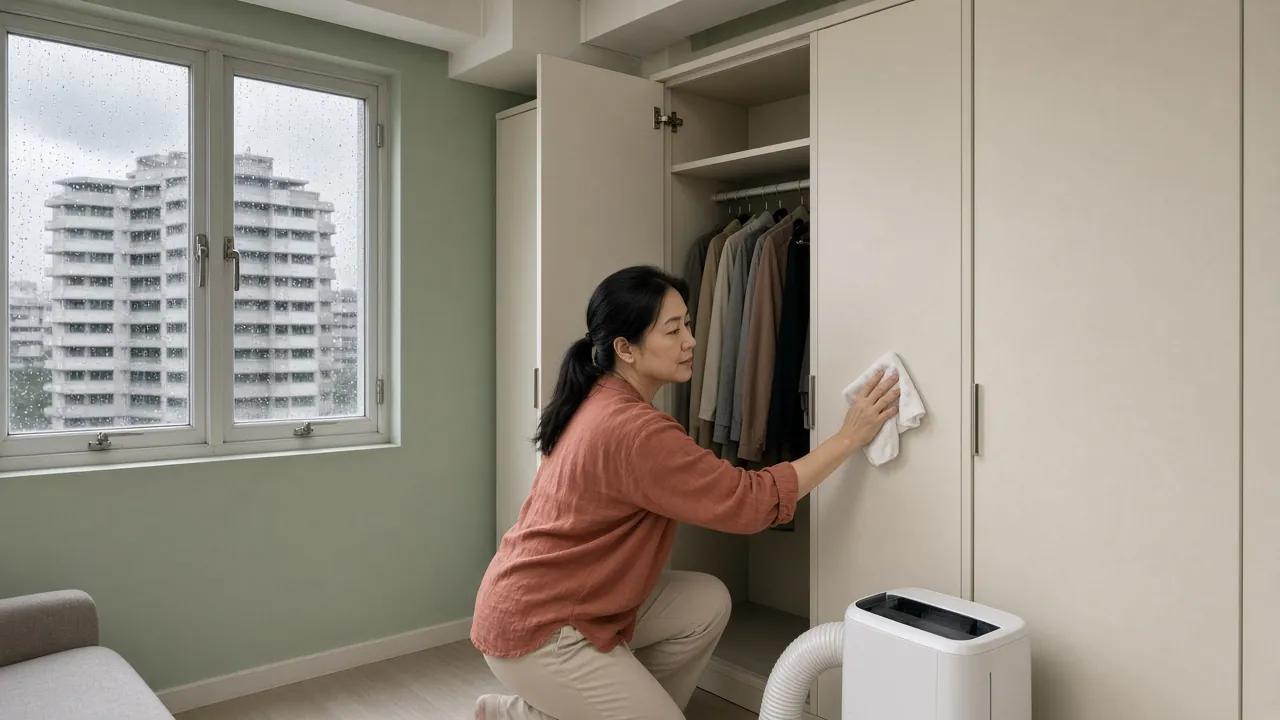
You open the wardrobe after a week of grey skies and find the back panel cool and slightly sticky. The shoes at the bottom smell damp. Nothing is dripping, but the cupboard has that stale, closed-in scent Singapore flats get when the air never quite dries.
That pattern sits squarely in the Northeast Monsoon. Meteorological Service Singapore (MSS), on its Climate of Singapore page, places the Northeast Monsoon from December to early March, with northerly to northeasterly winds. The early wet phase, usually December to early January, can bring monsoon surges with "widespread continuous moderate to heavy rain". Relative humidity often sits high: MSS records a mean annual relative humidity around 82%, and notes that relative humidity "frequently reaches 100% during prolonged periods of rain".
This guide is about built-in carpentry in HDB and BTO flats — wardrobes, shoe cabinets, kitchen cabinets and full-height storage — and how to keep damp and mould from settling in. Curtains are not the focus here; the job is the cabinets themselves.
What the wet phase does to a closed cupboard
MSS's Weather Systems page explains that Singapore sees about two to four Northeast Monsoon surges a year. Each can last between one and five days of "widespread continuous moderate to heavy rain". During those spells, outdoor air stays wet, laundry takes longer to dry, and shoes come home damp more often.
Built-in carpentry makes that worse when air cannot move: doors stay shut for days; cabinets sit flush on external walls so the coldest surface is against the back panel; shoe cabinets hold wet footwear under closed doors; kitchen base units sit near sinks and mopping, then stay closed overnight. Mould needs moisture and time — a clammy back panel or a pile of wet shoes is enough.
Fix the moisture source first
NEA's suggested measures for indoor air quality issues (written for youth facilities, but the causes apply at home) list common causes of high relative humidity: flooding or water leaks, condensation on cold surfaces, and moisture penetrating through walls, floors or ceilings. Suggested actions: identify the source, remove dampness, replace wet or water-damaged materials, and fix leakages.
Before you scrub a wardrobe panel, check for an air-con drain dripping behind a tall unit, a wet patch on the wall or ceiling above the carpentry, and shoes or laundry going in still damp. Cleaning without fixing the source usually means the spots return. The same note also suggests dehumidifiers at high-humidity locations, alongside air-conditioning servicing where the unit is meant to dehumidify as well as cool.
Everyday airflow that actually helps
For residential homes, NEA's updated ventilation guidance is plain: occupants "may improve home ventilation by opening doors and windows", and "Fans can be used to promote air circulation when needed". During monsoon weeks, open up on drier breaks between rain bands rather than during a surge.
- Crack wardrobe and storeroom doors for an hour or two on drier days.
- Leave a small gap between a wardrobe and an external wall if the layout allows.
- Ask for rear vents or toe-kick gaps when you plan new cabinets.
- Do not pack shelves tight to the back panel — a little space helps surfaces dry.
- Run a small dehumidifier in a bedroom or entry that stays clammy when windows stay shut for days.
Opening windows during a downpour mostly lets more wet air in. Ventilation helps most when you also dry wet items and keep leaks fixed.
Shoes, laundry and the entry cabinet
Shoe cabinets are often the first place mould shows up in monsoon season because wet soles go straight into a closed box. Wipe or air shoes before they go in; leave the dampest pairs on a rack overnight with the doors open. Keep a wipeable tray at the base so water does not sit on the carcass edge. Empty the unit after a multi-day surge and wipe the shelves dry. Avoid sealing wet leather or canvas in plastic bags inside the cabinet. The same logic applies to laundry tucked into full-height cabinets before it is fully dry.
Cleaning small mould patches safely
For small patches on hard cabinet surfaces, keep it simple. NEA's guidelines for cleaning and disinfecting residences recommend ventilating the home "especially during and after the cleaning and disinfection process", and using disposable gloves and a suitable face mask. Follow the product label, keep children and pets out of the way, and do not mix different cleaning products.
- Open a window or run a fan.
- Wipe or scrub the patch with detergent and water rather than dry-brushing spores into the air.
- Rinse and dry the surface completely.
- If marks remain and the finish can take it, use a household disinfectant exactly as labelled, then wipe residues off metal hinges and fittings.
If the panel feels soft, the growth keeps returning, or a large area is affected, stop and get a contractor or building defect check — porous board that has stayed wet may need replacing, not another wipe.
Planning new carpentry for a humid flat
If you are briefing a carpenter for a BTO or renovation, put monsoon damp on the brief early. Prime Decor's carpentry page describes bespoke wardrobes, feature walls and built-in storage measured to your walls, with materials chosen for everyday Singapore humidity. Specific board grades and edge details are something to discuss on site with the carpenter — not a catalogue promise in this article.
- External-wall runs: ask about a small stand-off, rear battens or ventilation gaps instead of a fully sealed flush back.
- Sealed edges and wipeable finishes near wet zones.
- Toe-kicks and plinth gaps that leave a cleanable space under base units.
- Kitchen wet zones: easy-to-wipe carcasses and service access to pipes so a slow leak is not hidden for months.
- Full-height towers: plan some open time for deep storage, or ventilated panels where damp collects.
A short Northeast Monsoon carpentry checklist
- After a wet spell, open wardrobe and shoe-cabinet doors on the next drier day.
- Feel the inside back panels on external-wall units; wipe and dry if they feel cool and clammy.
- Do not store damp shoes or half-dry laundry behind closed doors.
- Empty dehumidifier tanks and aircon drip trays on schedule.
- If you smell mustiness, find the moisture source before you buy more scent sachets.
- When you plan new built-ins, ask about gaps, vents and sealed edges at the free measure.
If you are planning wardrobes or built-in storage and want a second pair of eyes on layout and finishes for Singapore humidity, message us to book a measure. The measure is free.
FAQ
When is Singapore's Northeast Monsoon?
MSS places it from December to early March. The early wet phase is usually December to early January; late January to early March is often windy and relatively dry.
Why do HDB wardrobes smell musty in December and January?
Prolonged rain raises indoor humidity, and closed cabinets on cool walls trap damp air. Wet shoes and laundry add moisture. Opening doors on drier days, leaving a small wall gap where possible, and drying items before storage usually helps more than perfume alone.
Should built-in cabinets sit flush against an external wall?
A fully sealed flush back can leave a cold, damp pocket behind the unit. Many homeowners ask their carpenter for a small stand-off, rear battens or ventilation gaps. Discuss what fits your wall and layout at the measure.
Do dehumidifiers help with cabinet mould?
They can lower room humidity so surfaces dry faster. NEA's youth-facilities IAQ note also suggests dehumidifiers in high-humidity spots — the same idea applies at home. Clean existing mould first and fix leaks; a dehumidifier does not remove growth already there.
How should I clean a small mould patch on a cabinet?
Ventilate the room, wear gloves, wipe with detergent and water, then dry fully. Follow any disinfectant label carefully and do not mix products. Recurring or large patches need a moisture source check, and possibly board replacement.
What should I ask when planning new carpentry for monsoon damp?
Ask about ventilation gaps on external-wall runs, sealed edges near wet zones, wipeable finishes, and access to pipes behind kitchen units. Browse our carpentry options, then book a free measure to walk the rooms with those points in mind.
Sources
- Meteorological Service Singapore, Climate of Singapore — Northeast Monsoon December–early March; wet/dry phases; mean annual relative humidity around 82%; relative humidity frequently reaches 100% during prolonged periods of rain. Fetched 5 Nov 2026.
- Meteorological Service Singapore, Weather Systems — Monsoon Surge — about two to four Northeast Monsoon surges a year; each lasting one to five days of widespread continuous moderate to heavy rain. Fetched 5 Nov 2026.
- National Environment Agency, Updated Guidance on Improving Ventilation and Indoor Air Quality in Buildings for a Healthy Indoor Environment (updated Oct 2026) — residential homes: open doors and windows; fans to promote air circulation. Fetched 5 Nov 2026.
- National Environment Agency, Suggested Measures to Address Indoor Air Quality Issues in Youth Facilities (PDF) — high relative humidity: identify moisture sources, fix leakages, replace wet materials; deploy dehumidifiers (written for youth facilities; causes apply at home). Fetched 5 Nov 2026.
- National Environment Agency, Guidelines for Cleaning and Disinfecting Residences — ventilate during and after cleaning; PPE; follow product label. Fetched 5 Nov 2026.
Ready to transform your home?
Chat with us on WhatsApp for a free consultation or quote.
Chat with us on WhatsApp