
Outdoor Roller Blind for Singapore Balconies: 2026 Guide
By Prime Decor Furnishing
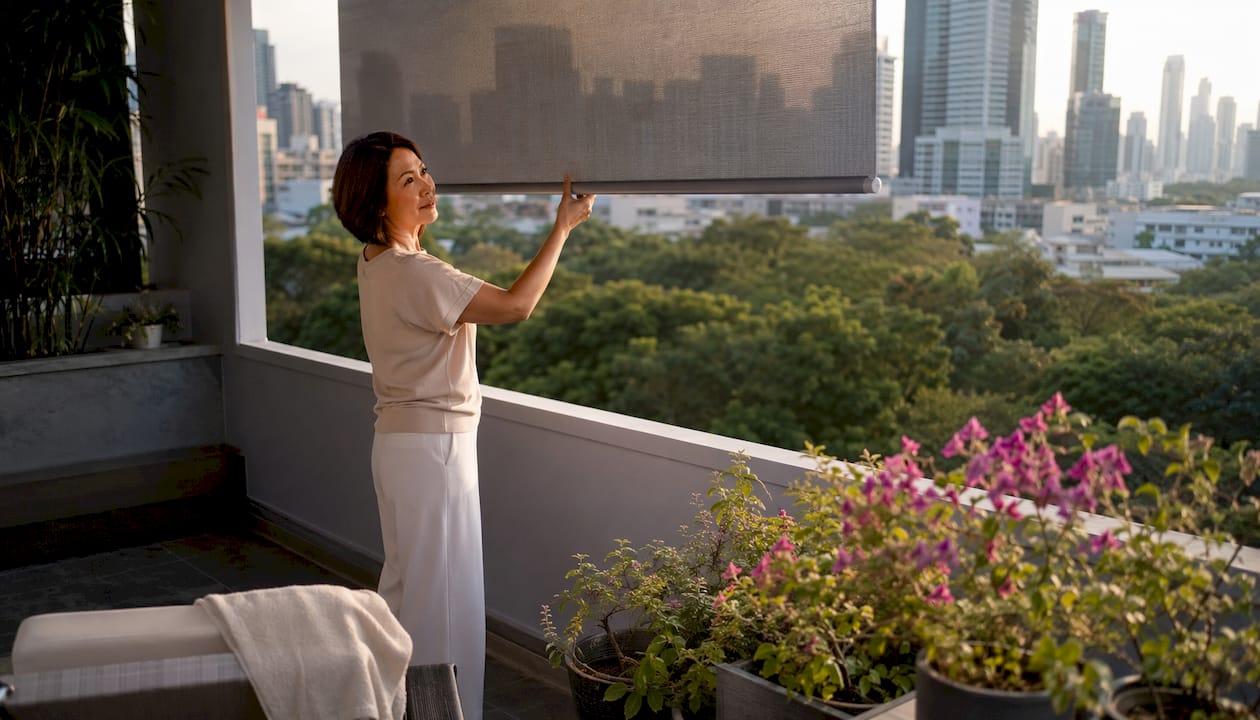
Outdoor Roller Blind for Singapore Balconies: 2026 Guide
For most Singapore balconies and terraces, a low-openness solar-screen or UV-stabilized PVC outdoor roller blind with a sealed cassette headbox and a side-channel or zip guide system is the safest all-round choice. On floors above the fifth, add a wind sensor and motorized operation.
Why this recommendation holds for Singapore:
- Solar-screen fabrics with low openness block a large proportion of UV rays while still letting you read the sky
- A sealed cassette keeps the fabric dry when retracted, cutting mold risk in humid conditions
- Side channels or zip tracks stop fabric sway during afternoon squalls and prevent rain splatter at the edges
- Motorized operation with wind-sensor auto-retract protects the blind on exposed high-rise units
- Powder-coated aluminum hardware and marine-grade fixings resist Singapore’s salt-laden, humid air
Your immediate next step: request Primedecorfurnishing’s free on-site measurement and quote before ordering anything. Gaps caused by inaccurate measurements are the single most common reason blinds fail in the field.
Table of Contents
- What types of outdoor roller blinds are available?
- Material and hardware features that matter in Singapore’s climate
- Manual, motorized, or smart: which control system fits your space?
- Sizing, mounting, and what HDB and condo rules mean for you
- What drives the cost of outdoor blinds in Singapore?
- How long do outdoor blinds last, and what maintenance do they need?
- How to choose the right blind and what to ask vendors
- What Primedecorfurnishing offers for outdoor roller blinds in Singapore
- Key Takeaways
- Why local installation experience changes the outcome
- Get a free measurement and quote from Primedecorfurnishing
- Useful sources and further reading
What types of outdoor roller blinds are available?
Not every product suits every space. Here is a quick breakdown of the five main categories and where each one earns its keep in Singapore.
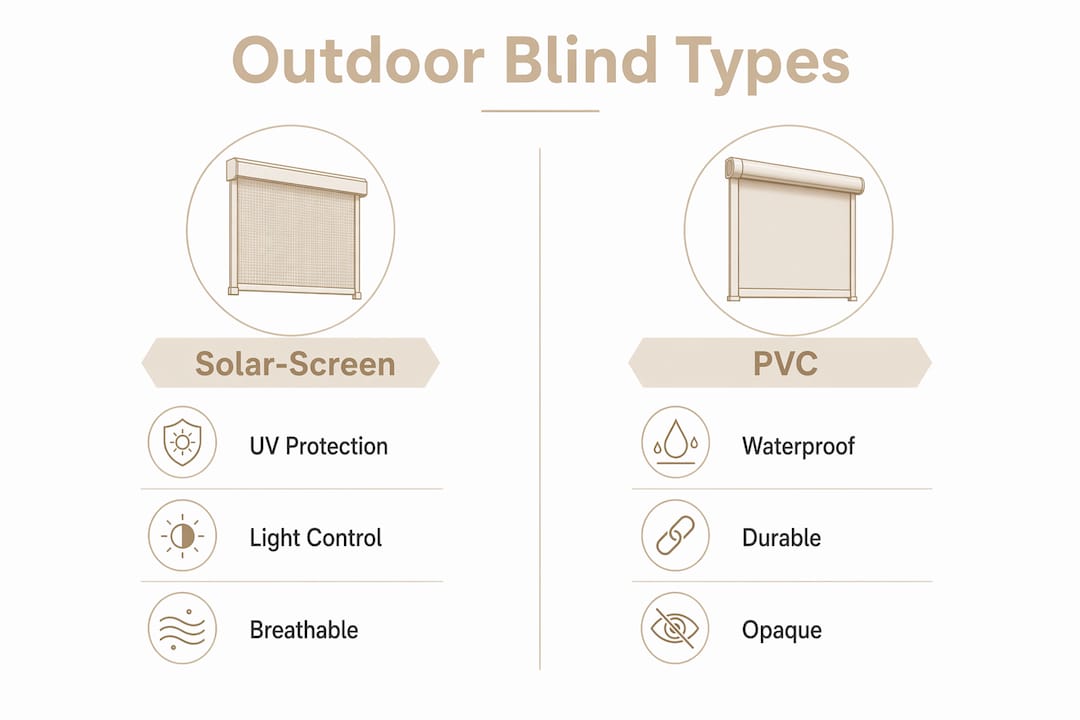
- Solar/solar-screen roller: The most popular choice for Singapore condos and HDB balconies. Solar-screen fabrics come in various openness factors; lower numbers mean more heat and UV rejection, higher numbers preserve more of the view. Best for living rooms and bedrooms that face west or south.
- PVC/waterproof vinyl cassette blind: Solid PVC fabric with no weave gaps. Excellent for heavy rain protection and easy hosing down. Less view-through than solar screen but the top pick for service yards, covered car porches, and any space that takes direct rain.
- Zip/Ziptrak side-channel system: The fabric runs inside full-perimeter channels, eliminating sway and sealing the edges. Side-channel systems are the right call for high-floor balconies and any unit exposed to strong wind. Higher cost, but the gap control is genuinely different from cable or open-roll systems.
- Canvas or traditional awning: Good shade and a classic look, but canvas absorbs moisture and needs treatment to resist mold in Singapore’s humidity. Better suited to covered patios than open balconies.
- Bamboo/chick blind: Ventilated and decorative, but the open weave offers minimal rain protection and bamboo degrades faster in sustained humidity. Stick to covered, sheltered patios only.
| Type | Best for | Rain protection | UV/heat rejection | Wind resistance |
|---|---|---|---|---|
| Solar-screen roller | Balconies, terraces, west-facing windows | Moderate | High (1%–3% openness, up to 99% UV block depending on fabric) | Moderate (needs guide) |
| PVC/waterproof vinyl | Service yards, covered patios, car porches | High | High (up to 99% UV block depending on fabric) | Moderate |
| Zip/Ziptrak side-channel | High-floor balconies, exposed terraces | High | High (up to 99% UV block depending on fabric) | High |
| Canvas awning | Covered patios, low-wind areas | Low–moderate | Moderate | Low |
| Bamboo/chick | Sheltered covered patios | Low | Low–moderate | Low |
Material and hardware features that matter in Singapore’s climate
Singapore’s combination of intense UV, daily rain, and year-round humidity punishes outdoor fabrics faster than temperate climates. Component quality determines lifespan more than color or pattern ever will.
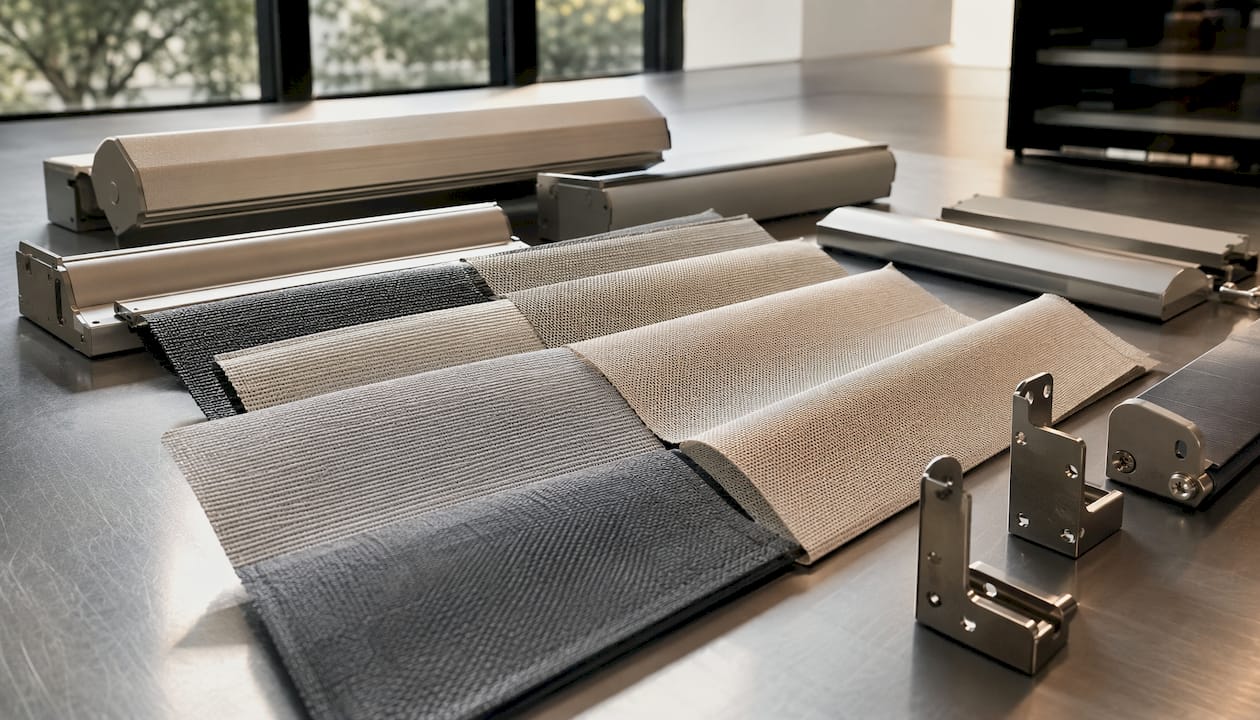
Fabric: UV-stabilized PVC or HDPE solar-screen weaves are the workhorses here. Depending on the fabric quality, outdoor roller blind materials can block up to 90–99% of UV rays, making them well suited to balconies where airflow matters. Where available, look for GREENGUARD or OEKO-TEX certification if the blind sits adjacent to an indoor living space.
Openness factor: This single number drives the heat-versus-view trade-off more than anything else.
| Openness factor | Heat/UV rejection | View-through | Best use |
|---|---|---|---|
| 1%–3% | Maximum | Minimal | West/south-facing, privacy priority |
| 3%–5% | High | Partial | Balanced heat control and outlook |
| 5%–10% | Moderate | Good | View-priority spaces, lower sun exposure |
Headbox/cassette: A sealed aluminum cassette keeps the rolled fabric out of rain and direct sun when the blind is up. Without one, the fabric sits exposed and mold sets in at the roll. Sealed headboxes and guide systems significantly extend shade life in outdoor conditions.
Guide system: Side tracks or cable guides stop the fabric from billowing in wind and block rain splatter at the edges. Full side channels (zip-style) are the strongest option for high-wind exposure. Cable guides are a cost-effective middle ground for lower floors.
Hardware finish: Powder-coated aluminum extrusions and stainless-steel or marine-grade fixings resist corrosion. Standard zinc or untreated steel brackets rust within months in Singapore’s salt-humid air.
Pro Tip: When the blind is adjacent to an air-conditioned room, choose a fabric with a low-VOC certification such as GREENGUARD Gold. Off-gassing from cheaper PVC compounds accumulates faster in sealed, air-conditioned spaces.
Manual, motorized, or smart: which control system fits your space?
The right control method depends on floor height, opening size, and how often you actually use the blind.
- Manual crank or chain: Lower upfront cost and nothing to charge or repair electronically. A solid choice for ground-floor patios or single blinds on sheltered low-rise balconies. The limitation is that nobody retracts a manual blind at 3 AM when a storm rolls in.
- Motorized (wired): The best option for large spans or hard-to-reach ceiling mounts. Wired motors are more reliable long-term than battery units and integrate cleanly with home automation for schedules and scenes. Motorized outdoor shades can include solar-battery motor options when running a power cable is impractical.
- Battery or solar-powered motor: Useful when wiring is genuinely not feasible, such as on a rental unit or a heritage-listed façade. Check the recharge interval before buying; a solar motor on a north-facing balcony may not get enough sun to stay charged.
- Wind sensors and auto-retract: Strongly recommended for any unit above the fifth floor. A wind sensor retracts the blind automatically when gusts exceed a set threshold, preventing the kind of damage that voids warranties. The upfront cost is real; so is the cost of replacing a torn blind after a Sumatra squall.
- Smart home integration: Compatibility with Alexa, Google Home, or Apple HomeKit is a convenience layer, not a safety feature. Get the mechanical robustness right first, then add smart control on top.
Pro Tip: Before committing to a motorized system, confirm that the supplier offers local after-sales motor service in Singapore. A motor warranty is only as good as the technician who can honor it.
Sizing, mounting, and what HDB and condo rules mean for you
Getting the measurements wrong is the most common reason an outdoor blind underperforms. Gaps at the sides let in glare and rain; a blind that is too short leaves the bottom of the opening exposed.
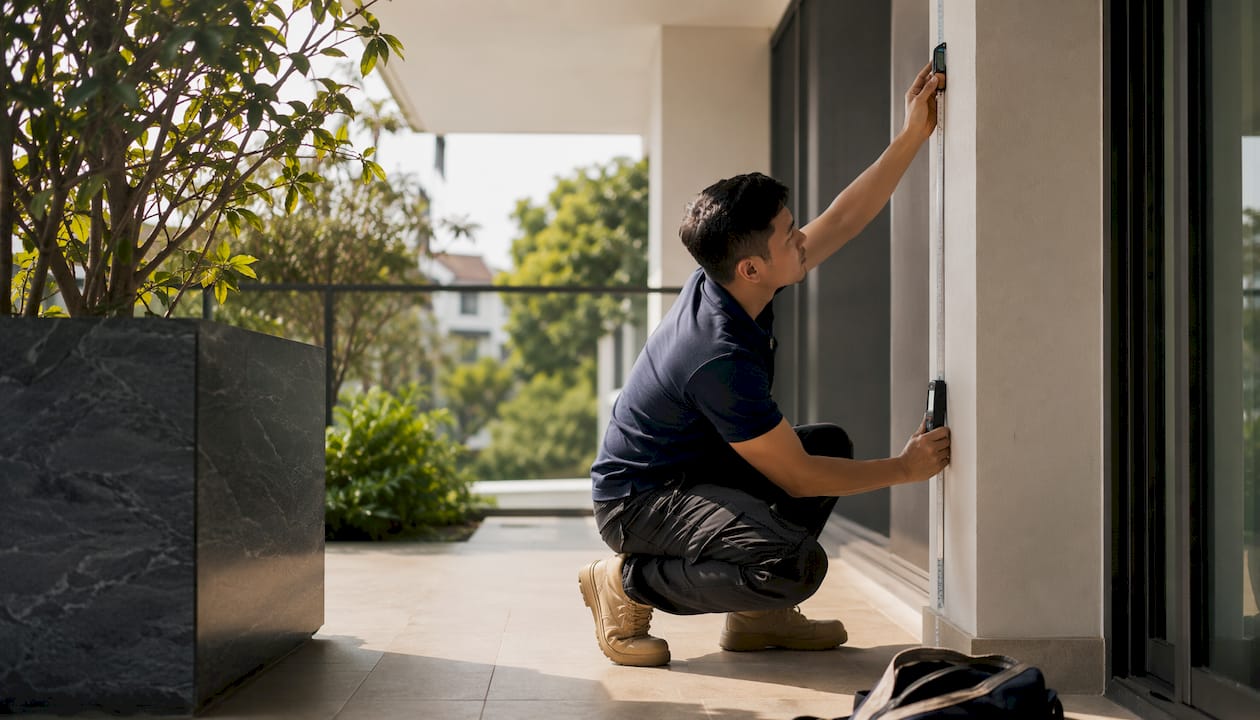
Mounting surfaces: Soffit (ceiling) mounts give the cleanest finish and the best rain coverage. Wall mounts are the fallback when structural beams or false ceilings block a soffit fix. Either way, the installer needs to confirm the substrate can take the anchor load before drilling.
Custom-fit vs. stock sizes: Made-to-measure fabrication closes the gaps that stock sizes leave. A 5mm gap at each side track sounds trivial until Singapore’s afternoon rain drives in horizontally.
HDB and condo rules: External fixtures on HDB flats and many condominiums require prior approval or must meet specific appearance guidelines. The HDB guidance on moisture-resistant materials and proper installation applies to balconies and service yards. Always confirm with your town council or management corporation before installation. Zip-track and Ziptrak systems that enclose a balcony may be treated as a structural addition in some blocks.
Checklist before the measurement visit:
- Measure the full width and drop of the opening (floor to soffit, wall to wall)
- Note any obstructions: pipes, condenser units, railings, or drainage channels
- Photograph the mounting area from multiple angles, including the soffit and side walls
- Record your floor level and note whether the unit is exposed or sheltered from prevailing winds
- Check your condo or HDB management rules on external fixtures and note any color or material restrictions
When to call a professional: Angled ceilings, uneven openings, shared façade rules, or any unit above the tenth floor all warrant an on-site assessment. A professional measurement visit from Primedecorfurnishing covers all of these and flags issues before fabrication begins. Their installation guide for Singapore homes walks through what to expect at each stage.
What drives the cost of outdoor blinds in Singapore?
Prices vary considerably, and understanding what moves the number helps you compare quotes on equal terms.
Primary cost drivers:
- Fabric type and openness: Solar-screen weaves cost more than basic PVC; certified or branded fabric collections add a further premium.
- Size: Width and drop are the biggest single variables. A 3m-wide balcony blind costs materially more than a 1.5m window blind.
- Guide system: Cable guides are the most affordable; full zip/side-channel systems add cost but deliver meaningfully better wind and rain performance.
- Motorization and sensors: A wired motor adds cost over a manual system; adding a wind sensor adds more. Battery motors sit in between.
- Cassette/headbox: A sealed aluminum cassette adds to the price but extends fabric life.
- Installation complexity: High-floor access, angled ceilings, or scaffolding requirements push labor costs up.
Market references from Australia suggest patio blind costs vary widely by size, fabric, and guide system. Singapore pricing follows the same drivers but differs by supplier and site complexity. Always get at least two written quotes specifying identical fabric grade, guide system, and motor model before deciding.
Hidden costs to watch: surface repair at the mounting point, post-install wiring for motorized units, and rope access or scaffolding for high-floor façades. Ask each vendor to itemize these separately.
Practical tip: ordering multiple blinds in one project almost always unlocks better pricing than single-blind orders. Bundle your balcony and service yard in one measurement visit.
How long do outdoor blinds last, and what maintenance do they need?
Weatherproof systems in Singapore typically last several years, with lifespan driven by fabric quality, sun exposure, and how consistently the blind is maintained.
Routine care:
- Rinse the fabric monthly with clean water to remove salt, dust, and organic matter that feeds mold
- Use a mild soap solution and a soft brush for tougher stains; avoid abrasive pads that damage the UV coating
- Check that drainage near the bottom hem is clear; standing water at the hem bar accelerates mold and hardware corrosion
- Retract the blind during extended periods of non-use or when a storm warning is issued
Motor and hardware: Annual checks on guide tension, track wear, and motor function keep small issues from becoming expensive ones. Battery motors need periodic recharging or replacement; smart motor systems often display battery status via their app, which takes the guesswork out of scheduling maintenance.
Warranty: Fabric and motor warranties are typically separate. Demand written warranty terms covering UV fade resistance, mold resistance, and motor life before signing. A warranty that covers fabric but excludes “weather-related damage” in Singapore’s climate is effectively no warranty at all.
How to choose the right blind and what to ask vendors
A clear decision framework saves time and prevents expensive mistakes.
Step-by-step buying process:
- Define your primary goal: heat reduction, rain protection, privacy, or view preservation. This determines fabric openness and guide system.
- Confirm the guide system: cable guides for lower floors with moderate wind; full side channels or zip tracks for high-floor or exposed units.
- Decide on operation: manual for simple, low-use spaces; motorized with wind sensor for high floors or large spans.
- Get a professional measurement: do not order on self-measured dimensions alone.
- Compare at least two written quotes on identical specifications before committing.
Questions to ask every vendor:
- What is the fabric openness factor and UV block rating?
- Is the headbox fully sealed when the blind is retracted?
- What wind rating or tested hardware do you supply for high-floor installations?
- Is the motor compatible with smart home systems, and which brands?
- Do you provide free on-site measurement and professional installation?
- What does the warranty cover separately for fabric, motor, and hardware?
- What is the lead time from order confirmation to installation?
Red flags: vague warranty wording, no on-site measurement offered, unwillingness to specify the fabric grade or motor model, and no local after-sales service contact.
Pro Tip: Ask for the fabric’s technical data sheet. A reputable supplier will provide the openness factor, UV block percentage, and fabric weight without hesitation. If they can’t, that tells you something.
What Primedecorfurnishing offers for outdoor roller blinds in Singapore
Primedecorfurnishing handles the full project: free on-site measurement, made-to-measure fabrication, professional installation, and warranty-backed after-sales service. Their outdoor motorized blinds range covers solar-screen rollers, PVC waterproof systems, and zip-track/side-channel installations with sealed cassette options.
Service highlights:
- Free on-site measurement and consultation before any commitment
- Made-to-measure fabrication to eliminate the gaps that stock sizes leave
- Motorization options including wired motors and wind-sensor integration
- Sealed cassette headboxes and full side-channel guide systems for high-floor units
- Warranty coverage on both fabric and hardware, with local after-sales support
- Over 5,000 satisfied customers and recognition in The Straits Times for pricing transparency
For HDB homeowners, their BTO and HDB-focused service addresses the specific approval and material requirements that apply to public housing façades.
Pro Tip: Have your floor level, a photo of the mounting area, and your preferred operation method ready before the measurement visit. The consultant can then give you a more accurate quote on the spot rather than following up later.
Key Takeaways
For Singapore balconies and terraces, a low-openness weatherproof roller with a sealed cassette, a robust guide system, and professional measurement is the combination that delivers lasting performance in tropical conditions.
| Point | Details |
|---|---|
| Best all-round choice | Low-openness solar-screen or PVC roller with sealed cassette and side-channel guide system. |
| Wind protection on high floors | Zip/side-channel systems with motorized wind-sensor auto-retract prevent storm damage above the fifth floor. |
| Lifespan expectation | Weatherproof systems last several years, depending on fabric quality, sun exposure, and maintenance. |
| Fabric openness trade-off | 1%–3% openness maximizes heat and UV rejection; 5%+ preserves more view but reduces thermal performance. |
| Primedecorfurnishing | Offers free on-site measurement, made-to-measure fabrication, zip-track and motorized options, and warranty-backed installation across Singapore. |
Why local installation experience changes the outcome
The spec sheet for any outdoor blind looks the same whether it is installed in Singapore or Stockholm. What the spec sheet does not capture is what actually goes wrong on site.
The recurring issues local installers see are not about fabric quality. They are about poor measurement, underspecified guide systems, and a consistent underestimation of how aggressively Singapore’s humidity attacks anything left slightly damp. A blind installed with a 10mm gap at the side track on a west-facing balcony will admit enough afternoon rain to soak the floor and start mold on the hem bar within a season. The fabric itself may be fine. The installation was not.
HDB and condo façade rules add another layer that no product catalogue addresses. Which blocks require town council approval, which management corporations enforce color restrictions, and which floor levels trigger additional structural checks — these are things a local installer learns from doing dozens of projects in the same estate, not from reading a brochure. An off-the-shelf approach, ordered online and self-installed, skips all of that and often pays for it later.
The practical difference shows up in the details: site-specific mounting solutions for awkward soffits, bespoke headbox sizing for non-standard openings, and fabric openness chosen for the actual view angle and sun path of that specific unit rather than a generic recommendation. That specificity is what separates a blind that performs for a decade from one that needs replacing in three years.
Get a free measurement and quote from Primedecorfurnishing
Primedecorfurnishing gives Singapore homeowners a straightforward path from decision to installation: a free on-site measurement visit, a made-to-measure quote with no obligation, and professional installation backed by a written warranty on both fabric and hardware.
You can book by phone, WhatsApp, or through the online enquiry form. Typical lead time from confirmed order to installation is a few weeks, depending on fabrication and scheduling. Before the visit, have a photo of your mounting area, a rough width and drop measurement, your preferred operation method (manual or motorized), and any HDB or condo façade notes ready. The consultant will confirm specifications on site and follow up with a detailed written quote.
Browse the full range of outdoor and indoor window coverings or go straight to the product catalog to see motorized and zip-track options before your visit.
Useful sources and further reading
The resources below cover fabric openness specifications, motorization options, and Singapore-specific installation guidance in more depth.
| Resource | What it covers |
|---|---|
| HDB official guidance | Approval requirements and material standards for external fixtures on HDB flats |
| Solar shade openness comparison — ShadeDocs | Technical openness-factor tables and heat/UV trade-off guidance |
| Outdoor shades — Blindsgalore | Fabric openness ranges and UV block performance data |
| Patio shades — Insolroll | Headbox and guide system specifications for outdoor shade hardware |
| Motorized outdoor shades — Graywind | Smart motor options, solar/battery specs, and maintenance intervals |
| Patio blind cost guide — hipages | Cost driver breakdown (Australian market; use as a framework reference only) |
| Retractable awnings — Artificial Grass Installers | Practical comparison of retractable shade strategies and installation considerations |
| Primedecorfurnishing outdoor motorized blinds | Local product range, motorization options, and installation service details |
Recommended
Ready to transform your home?
Chat with us on WhatsApp for a free consultation or quote.
Chat with us on WhatsApp